

Starting a new school year in third grade is exciting, but it can also feel overwhelming. Between teaching procedures, learning names, and building classroom community, the first week can fly by before you know it!
The good news? You don't need elaborate lesson plans to have a successful first week. A few engaging activities can help students feel comfortable, make new friends, and start building a positive classroom environment from day one.
Here are 10 first week of school activities that third graders absolutely love!
1. Find Someone Who...
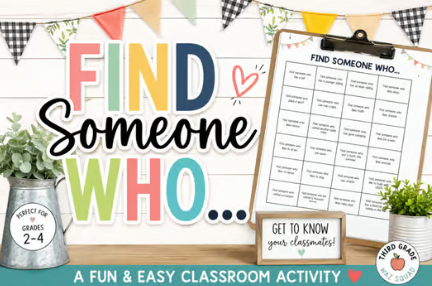
If you've never tried a "Find Someone Who..." activity during the first week of school, let this be your sign! Third graders LOVE getting out of their seats, and this is one of the easiest ways to break the ice without putting anyone on the spot.
I like to hand each student a "Find Someone Who" sheet with prompts like:
- Has a pet
- Loves pizza
- Has a summer birthday
- Plays a sport
- Loves to read
- Has visited another state
Then, I set a timer for about 10–15 minutes and let them mingle around the room. The rule? They have to talk to someone new for every box they fill in.
You'll hear things like:
"Wait, YOU have a hamster too?!"
"I can't believe you went to Disney this summer!"
By the end of the activity, students have talked to several classmates, and suddenly the room feels a lot less intimidating.
Teacher Tip: Keep a few extra copies handy. Someone will accidentally write their own name in every box (ask me how I know!).
2. All About Me Bags
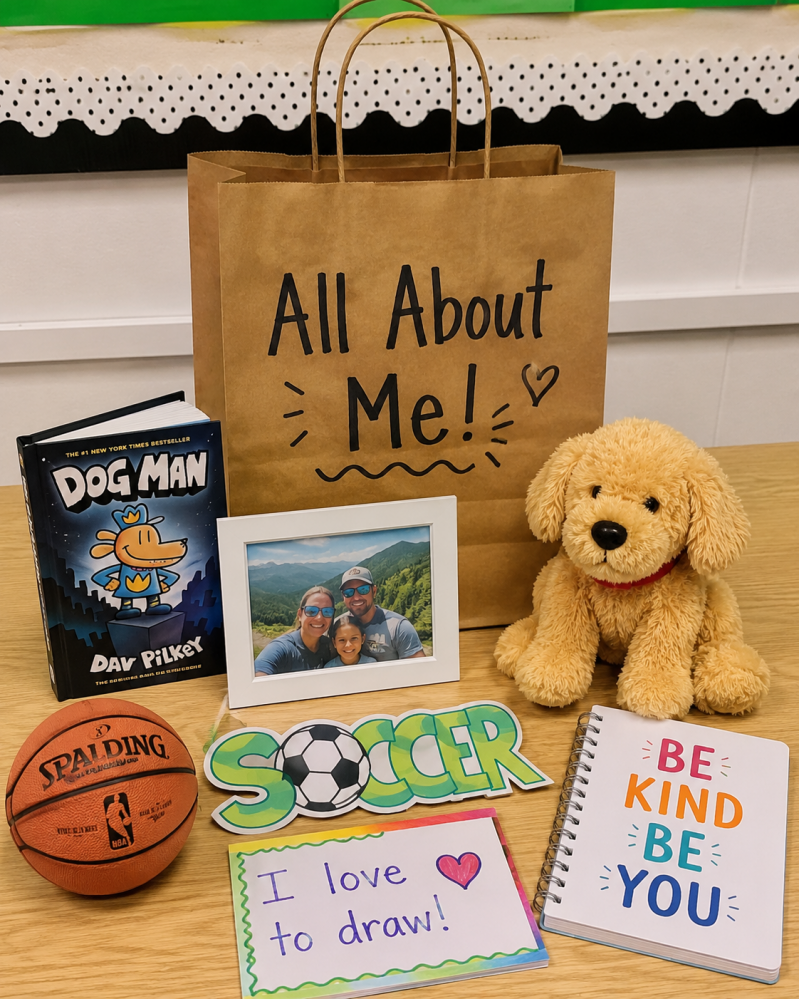
I love this activity because it gives every student a chance to say, "This is who I am."
A few days before school starts, send home a note asking students to bring 3–5 small items that represent them. Every year, I'm surprised by what students choose. You'll see everything from baseball cards to stuffed animals to family photos.
One of my students brought a rock collection one year and spent five minutes explaining why each one was special. The class was completely invested by the end!
These little moments are what build classroom community.
Don't worry if some students forget their bags. I always keep paper and crayons nearby so they can draw their favorite things, or I let them pick things around the classroom to share instead.
Affiliate Link for Bags: https://amzn.to/4ppYozO
3. Classroom Scavenger Hunt
Let's be honest—if you stand at the front of the room and explain where everything is, half the class will forget within ten minutes.
Instead, turn it into a game!
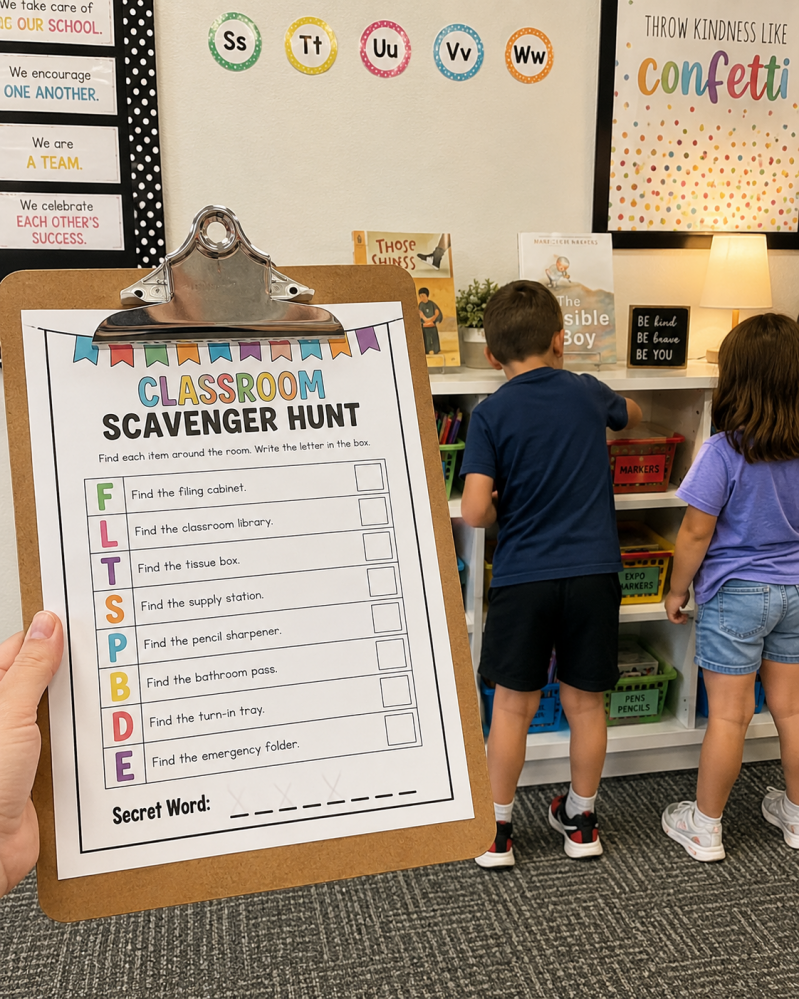
I hide clues around the room that lead students to important places like:
- The classroom library
- Turn-in trays
- Pencil sharpener
- Supply station
- Bathroom pass
- Emergency folder
Not only are students moving around and having fun, but they're also learning where everything is without realizing it.
Trust me, you'll thank yourself later when you're not answering, "Where do I put my homework?" fifteen times a day.
4. Build the Tallest Tower Challenge
Do you need a quick activity that requires almost no prep? This is it.
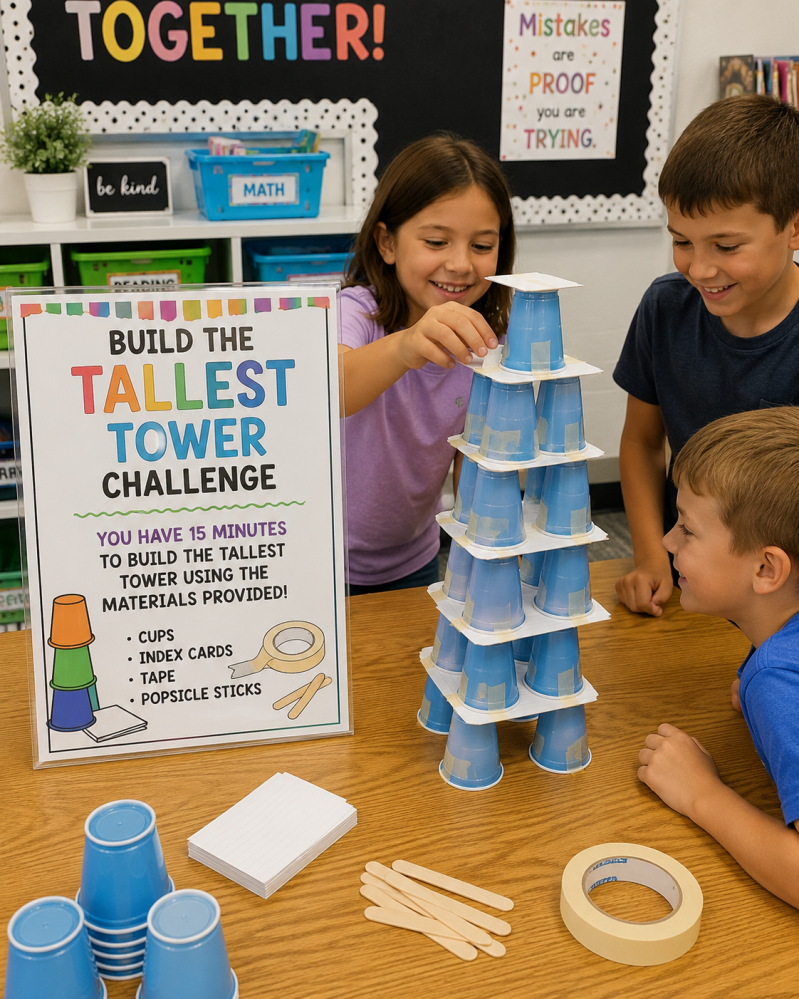
Put students into groups of three or four and give them a few simple supplies:
Then say, "You have 15 minutes to build the tallest tower possible. Ready...GO!"
Suddenly, you'll see future engineers emerge.
Some groups will carefully plan every step. Others will immediately stack cups as high as possible and watch them fall over in spectacular fashion.
The best part? You get to observe how students work together before diving into academic group work.
Who takes the lead? Who encourages others? Who needs help sharing ideas?
You'll learn so much about your students in just 15 minutes.
5. "Would You Rather..." Movement Game
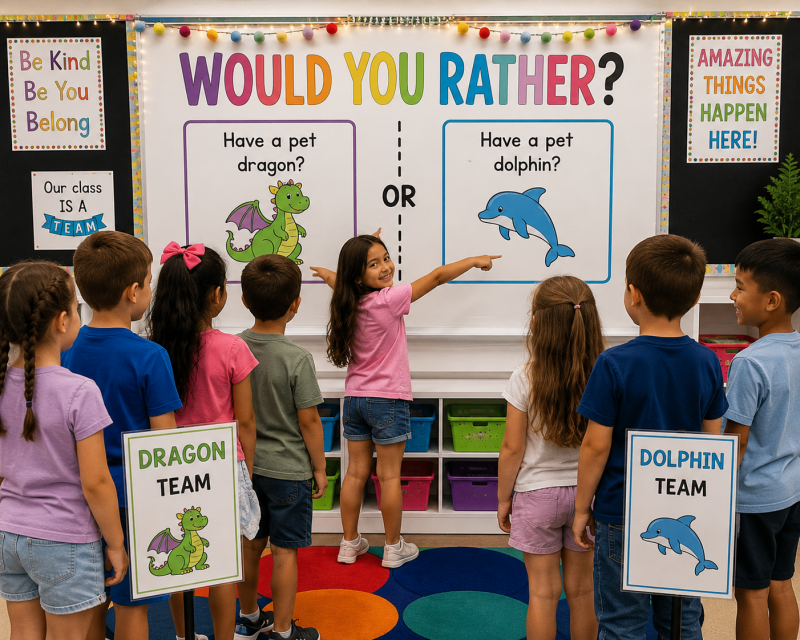
There is something about third graders and "Would You Rather?" questions. They just can't get enough of them!
This is one of my favorite activities to pull out when I notice students getting a little wiggly or if we have a few extra minutes before lunch. It's simple, requires zero prep, and gets everyone laughing.
Here's how I play:
- Designate one side of the room as Option A and the other as Option B.
- Read a question aloud.
- Students walk to the side that matches their answer.
- Give a few volunteers a chance to explain their choices.
Some of my favorite questions include:
- Would you rather have a pet dragon or a pet unicorn?
- Would you rather live at the beach or in the mountains?
- Would you rather eat pancakes or waffles forever?
- Would you rather fly or become invisible?
- Would you rather have an extra recess or no homework for a week?
You'll quickly learn who your big personalities are and who might need a little encouragement to speak up. Plus, students start discovering common interests with their classmates.
One year, I had an entire debate break out over whether waffles were superior to pancakes (My class was very passionate about waffles.)
Teacher Tip: Keep a running list of your favorite questions throughout the year. This also makes an excellent brain break when students need to reset after a long lesson.
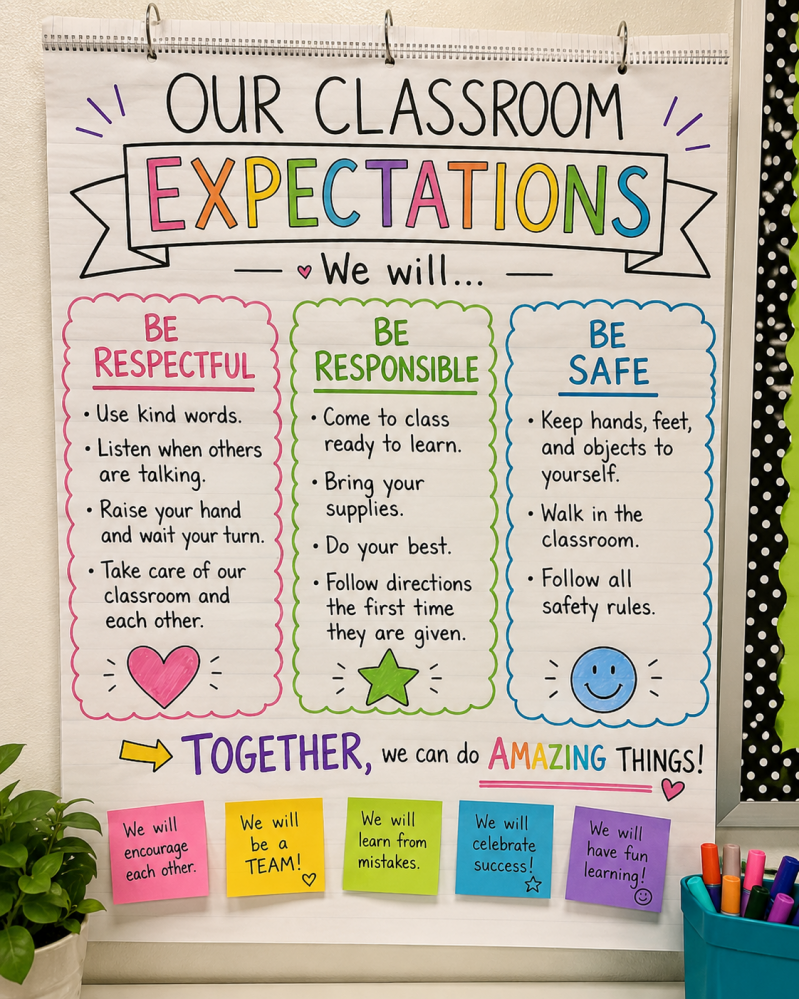
6. Classroom Expectations Anchor Chart
Can I let you in on a little secret?
Students are much more likely to follow classroom rules when they feel like they helped create them.
Instead of walking in on Day 1 with a giant poster that says "CLASSROOM RULES" at the top, spend some time creating expectations together.
I usually ask questions like:
- What helps us learn?
- What should we do if someone is speaking?
- How do we want people to feel in our classroom?
- What can we do if we make a mistake?
- How can we show kindness to others?
As students share their ideas, I write them on an anchor chart. It's always amazing how thoughtful third graders can be.
You'll hear responses like:
"We should let people finish talking."
"Everyone should feel included."
"It's okay to make mistakes because that's how we learn."
By the end of the discussion, you've not only created classroom expectations together, but you've also started building a classroom culture based on respect and kindness.
And here's the best part—when someone forgets a rule later in the year, you can simply point to the chart and say, "Remember, YOU came up with that one!"
Teacher Tip: Keep your anchor chart up all year long. You'll refer to it more often than you think.
Affiliate Link to Anchor Chart Paper: https://amzn.to/3TsT4zL
Affiliate Link to Chart Paper Markers: https://amzn.to/4pCANw8
7. Read Aloud and Discussion Time
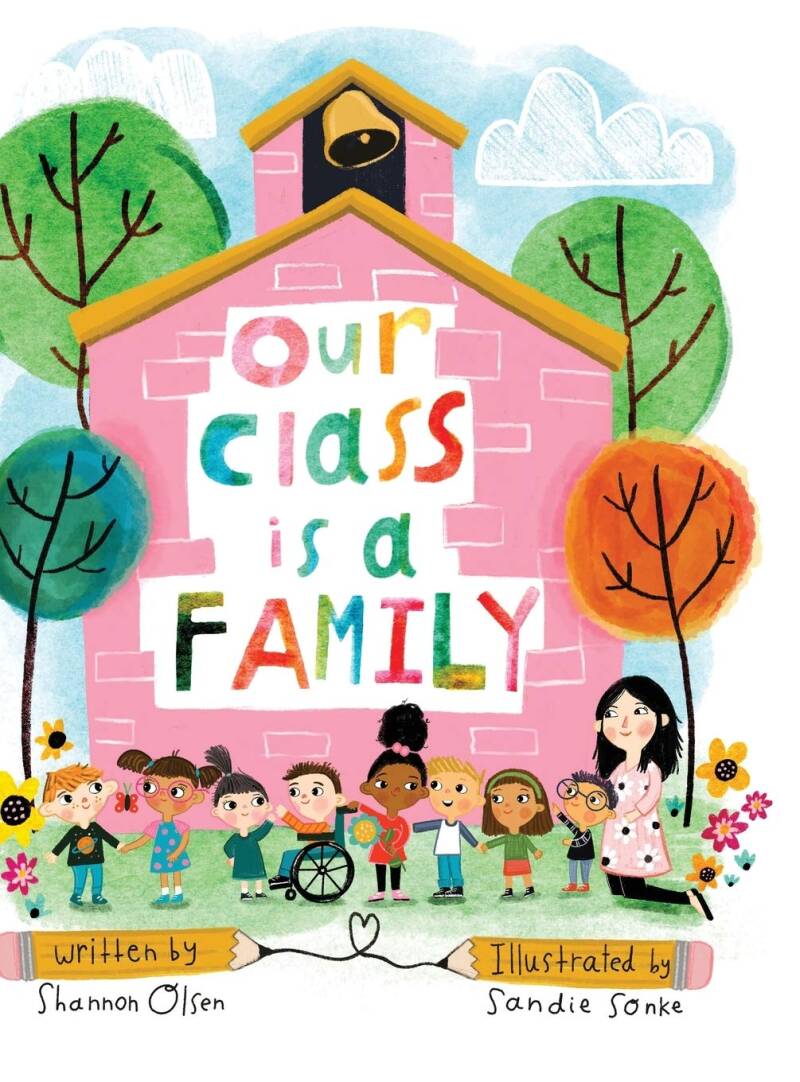
If there's one thing I never skip during the first week of school, it's read-aloud time.
There's something magical about gathering on the carpet with a new class and sharing a story together. It immediately slows things down and helps everyone feel connected.
Some of my favorite first-week books include:
- Our Class Is a Family
- The Day You Begin
- The Invisible Boy
- We Are All Wonders
- The Smallest Girl in the Smallest Grade
After reading, ask questions like:
- How do you want our classroom to feel this year?
- What can we do to help others feel included?
- Have you ever felt nervous about starting something new?
Don't be surprised if students open up in ways you didn't expect. These conversations often become the foundation for your classroom community all year long.
8. Time Capsule Activity
This might be one of my favorite first-week traditions.
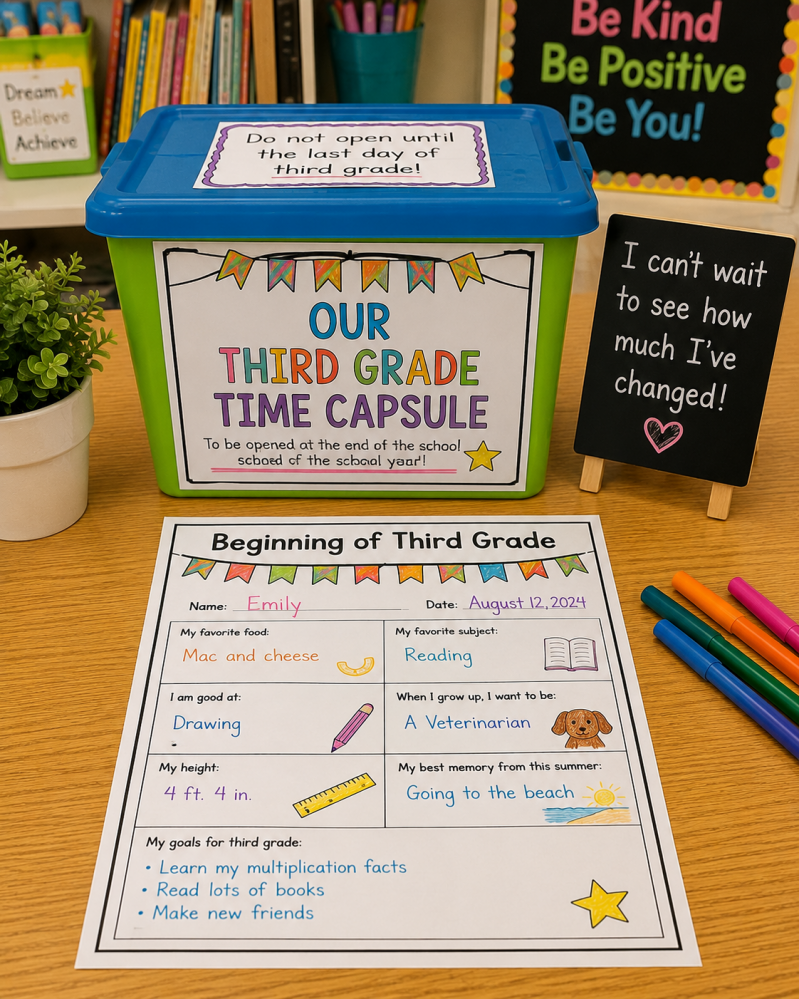
During the first week of school, I have students complete a "Beginning of Third Grade" page. It's simple, but it becomes something they'll treasure by the end of the year.
I include prompts like:
- My favorite food is...
- When I grow up, I want to be...
- My favorite thing to do is...
- I am ___ feet tall.
- My favorite subject is...
- This year, I hope to...
I also have students draw a self-portrait, and let me tell you—it is absolutely adorable to compare these to the ones they create in May.
Place all of the pages in a folder, envelope, or keepsake box and put them away until the last week of school.
Trust me on this one: there will be smiles, laughter, and maybe even a few tears when students realize how much they've grown.
One year, a student wrote that he wanted to become a professional dinosaur trainer. By the end of the year, he had changed his mind and decided he wanted to be a veterinarian instead!
These are the kinds of memories that make teaching so special.
Teacher Tip: Take a class picture during the first week and include it in your time capsule collection.
9. Classroom Jobs Introduction
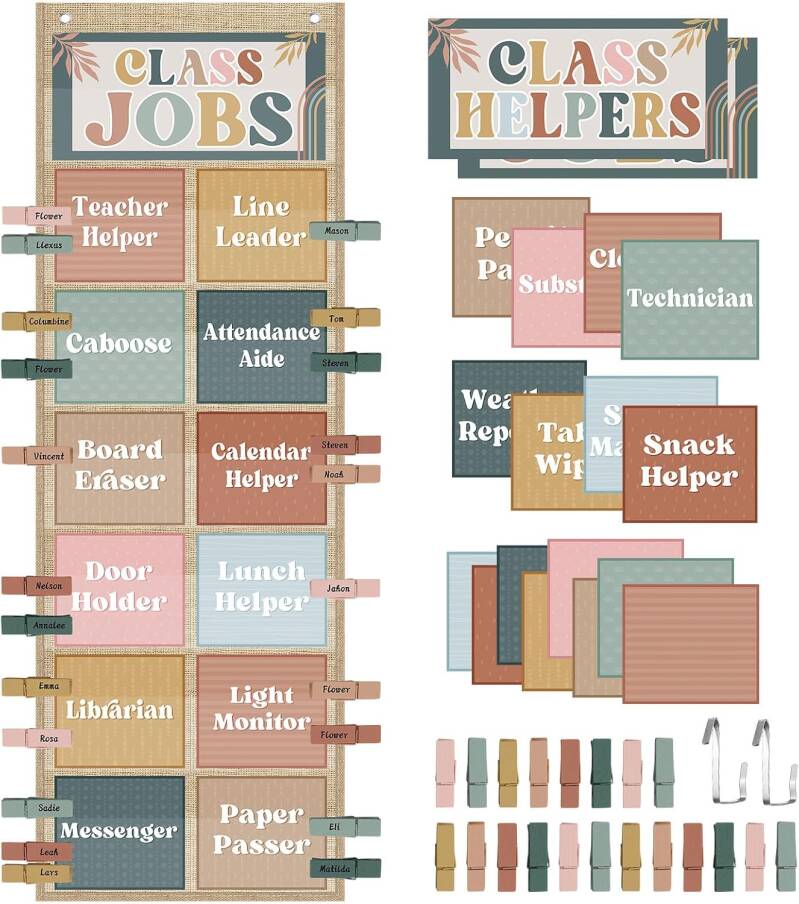
Third graders LOVE having responsibilities.
Seriously, give a student the title of "Line Leader" or "Technology Helper," and suddenly they take their job very seriously.
During the first week, I introduce classroom jobs and explain why each one is important. You could even give them a "job application" to prove they can handle the job. Some of my favorite classroom jobs include:
- Line Leader and Caboose
- Paper Passer
- Classroom Librarian
- Technology Helper
- Supply Manager
- Messenger
- Gardener
- Clean Up Crew
I like to tell students:
"Our classroom is a team, and every team member has an important job."
Giving students ownership over the classroom helps them feel invested from the very beginning. It also teaches responsibility and independence, two things every teacher appreciates!
You'll quickly learn which students are natural leaders and which students thrive when given a little extra responsibility.
And yes, there will probably be a few disappointed faces when everyone wants to be the Line Leader. Rotating jobs weekly helps solve that problem!
Teacher Tip: Consider creating a classroom jobs bulletin board so students can easily see their responsibilities each week.
10. Friendship Paper Chain
If you're looking for a simple activity that doubles as classroom decor, this is it.
During the first week, give each student a strip of construction paper and ask them to finish this sentence:
"I can make our classroom a better place by..."
Their responses are always heartwarming.
Some students write:
- Helping others.
- Being a good friend.
- Including everyone.
- Listening to my teacher.
- Sharing supplies.
- Making people laugh when they're sad.
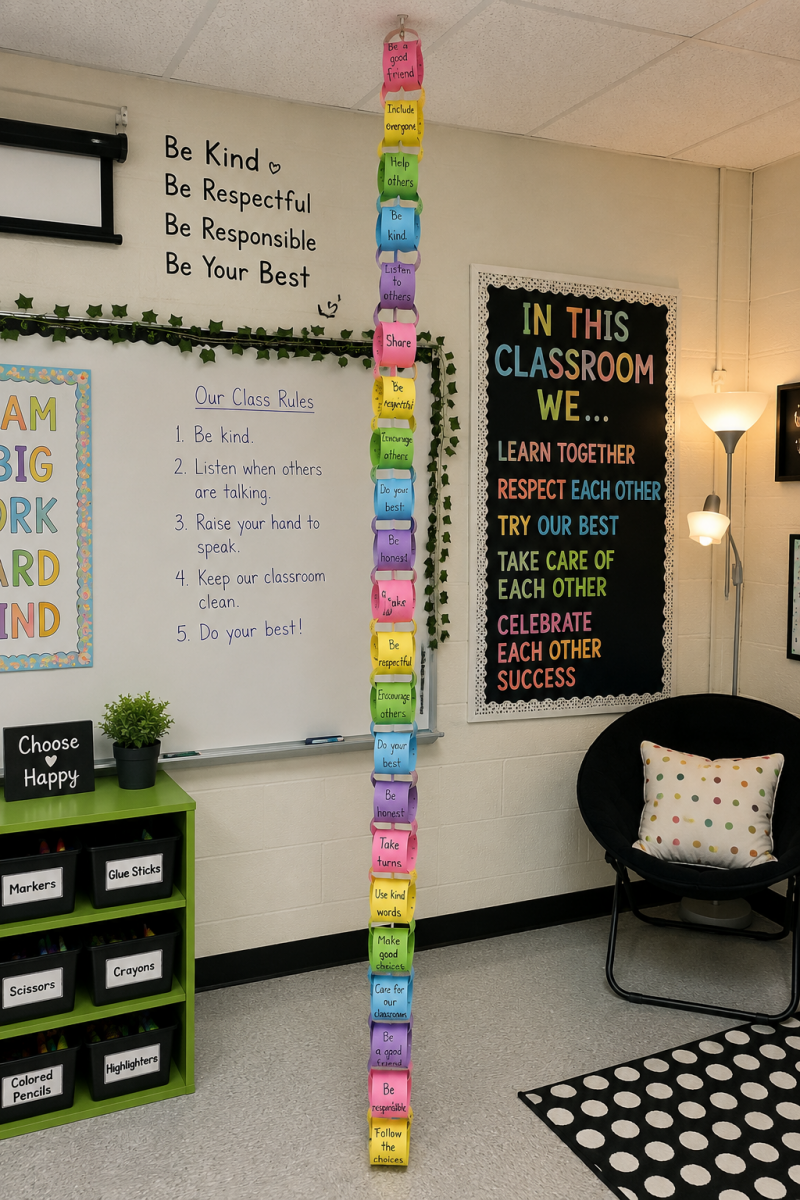
Once everyone has finished, connect the strips to create a giant paper chain and hang it somewhere in your classroom.
Every time I do this activity, I'm reminded that students genuinely want to do the right thing. They want to belong. They want to be kind. Sometimes they just need a reminder.
The best part is that the paper chain becomes more than just a decoration. When your class has a tough day in November or February, you can point to it and say:
"Remember the promises we made to each other?"
It's a simple but powerful way to bring your classroom community back together.
And if you're anything like me, you'll probably save the paper chain at the end of the year because you won't have the heart to throw it away.
Teacher Tip: Snap a picture of your class standing underneath the finished paper chain. It's a great memory to include in your end-of-year slideshow!
Final Thoughts
The first week of school can feel like a whirlwind. Your classroom may not be perfectly decorated, and you might forget to teach a procedure or two (I've definitely done that!).
Remember this: your students won't remember whether your bulletin boards were Pinterest-worthy. They'll remember how they felt in your classroom.
If they leave the first week thinking, "My teacher cares about me," then you've already had a successful start to the year.
Take a deep breath, give yourself some grace, and enjoy these first few days with your new group of third graders. They only happen once.
💛 Third Grade Waz Squad
Add comment
Comments